
Evaluation And Planning
We review your symptoms and medical history, examine the area, and take appropriate images. Your doctor explains whether the tooth can be saved, what removal involves, and whether a replacement should be planned.
Relief With A Thoughtful Plan
When a tooth cannot be predictably saved, careful removal can relieve pain, protect nearby teeth, and create a healthier path forward.
Mountain View Smiles
Our first goal is to preserve natural teeth when they can be restored with a good long-term outlook. Sometimes a tooth is too damaged, infected, loose, or poorly positioned to remain healthy. In those situations, an extraction may prevent ongoing pain and protect the rest of your mouth.
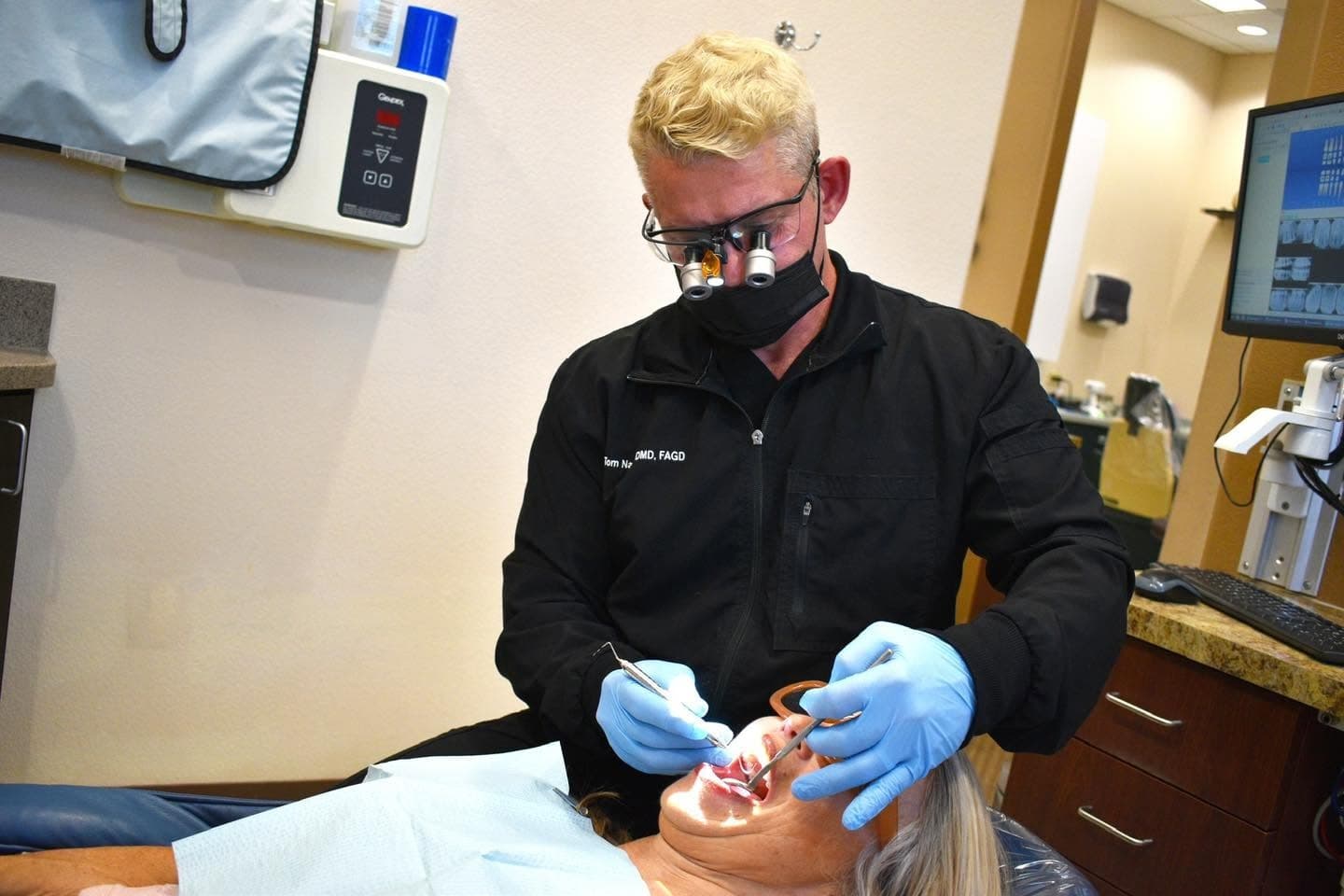
Dr. Tom Nack will evaluate the tooth and explain why removal is or is not recommended. You will also learn about appropriate alternatives. A painful tooth does not automatically need to be pulled, and an extraction should never feel like a decision you are rushed into.
Mountain View Smiles uses digital imaging when needed to understand the tooth, roots, nearby structures, and surrounding bone. We also offer several sedation options for patients who feel anxious or need more involved care.
Mountain View Smiles
A tooth may need removal because of:
Your doctor considers your symptoms, health, X-rays, treatment goals, and replacement choices before making a recommendation.
Mountain View Smiles
The treatment area is numbed before the tooth is removed. You should feel pressure and movement rather than sharp pain. Tell us immediately if you are uncomfortable so we can pause and respond.
For patients who need extra support, Mountain View Smiles offers laughing gas, oral sedation, and conscious IV sedation. The appropriate option depends on your health, level of anxiety, planned procedure, and transportation arrangements. Dr. Brent Woodmansee holds a master certification from the American Society of Dental Anesthesiology–College of Sedation in Dentistry.
Mountain View Smiles
We review your symptoms and medical history, examine the area, and take appropriate images. Your doctor explains whether the tooth can be saved, what removal involves, and whether a replacement should be planned.
After the area is fully numb and any planned sedation has taken effect, your doctor gently removes the tooth. The approach depends on the tooth’s position and condition. We keep you informed without using graphic or alarming language.
A protective blood clot forms at the site and supports healing. Follow the written instructions carefully. Avoid smoking, forceful rinsing, drinking through a straw, or disturbing the area during the early healing period. Choose soft foods and use any recommended medication as directed.
Not every extracted tooth needs to be replaced, but many do. A missing tooth may affect chewing or allow nearby teeth to shift. We can discuss a dental implant or another appropriate restoration once your situation is clear.
Mountain View Smiles
Helpful Answers
An exam and X-ray are needed. Pain alone does not determine the answer. Your doctor will evaluate whether a filling, crown, root canal, periodontal care, or another treatment can preserve the tooth.
Many extractions are completed with local anesthetic while you are awake. Laughing gas, oral sedation, or conscious IV sedation may be available when appropriate.
Choose soft, cool or lukewarm foods and avoid chewing directly over the site. Follow the personalized instructions our team provides, since recommendations can change with the procedure.
Call if pain or swelling worsens rather than improves, bleeding is difficult to control, you develop a fever, or something does not feel right. We would rather answer a question early.
It depends on which tooth is removed, how your bite functions, and your long-term goals. We will explain whether leaving the space could affect neighboring teeth or chewing.
Mountain View Smiles · Scottsdale
Schedule an extraction evaluation at Mountain View Smiles in Scottsdale and understand every appropriate option before you decide.